
BUSINESS AFFAIRS. REPRESENTATION OF LEGAL ENTITIES.
«Justice and fairness consist in everyone having and doing their own so that no one takes what belongs to another and is not deprived of their own.»
Disputes between legal entities are considered by commercial courts.
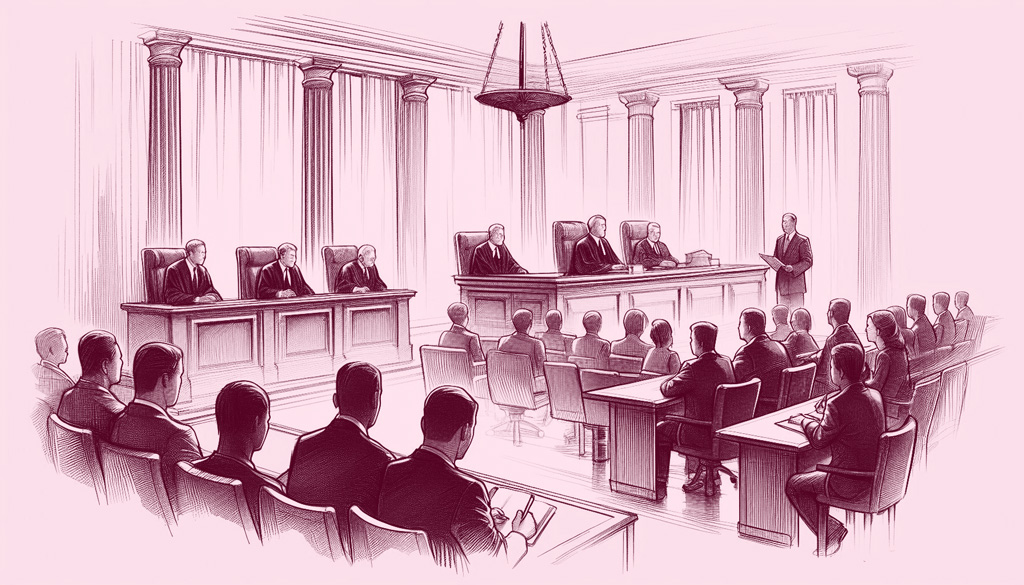
These words of Confucius reflect the essence of justice in general and rights in particular, best illustrating economic relations, which arise between legal entities in the process of their economic activities. However, in practice, things do not always unfold as the wise man believed, outlined in the law, or as anticipated by the parties involved in economic relations, leading to disputes that in Ukraine are resolved by commercial courts following the rules of the Commercial Procedural Code of Ukraine.
The economic branch of the judicial power in Ukraine is represented by local commercial courts (commercial courts of regions, cities of Kyiv and Sevastopol), appellate commercial courts (Eastern Commercial Appellate Court (Kharkiv) with territorial jurisdiction over Kharkiv, Donetsk, Luhansk, and Poltava regions, Central Commercial Appellate Court (Dnipro) with territorial jurisdiction over Dnipropetrovsk, Zaporizhzhia, and Kirovohrad regions, Southern Commercial Appellate Court (Kherson) with territorial jurisdiction over Crimea and the city of Sevastopol, South-Western Commercial Appellate Court (Odesa) with territorial jurisdiction over Mykolaiv, Odessa, and Kherson regions, Northern Commercial Appellate Court (Kyiv) with territorial jurisdiction over Kyiv, Sumy, Cherkasy, and Chernihiv regions and the city of Kyiv, North-Western Commercial Appellate Court (Rivne) with territorial jurisdiction over Rivne, Vinnytsia, Volyn, Khmelnytsky, and Zhytomyr regions and Western Commercial Appellate Court (Lviv) with territorial jurisdiction over Lviv, Ternopil, Ivano-Frankivsk, Chernivtsi, and Zakarpattia regions), as well as the Cassation Commercial Court as part of the Supreme Court.
For example, if a dispute is under the jurisdiction of the Commercial Court of the city of Kyiv, this court will consider it as a court of first instance, the decision of which can be appealed in an appellate manner to the Northern Commercial Appellate Court, and the court rulings of these courts will be reviewed by the Cassation Commercial Court as part of the Supreme Court.
Cases arising in connection with carrying out economic activities (where the parties involved are legal entities and individual entrepreneurs) cover a wide range of subject matter, with the most common being economic cases related to disputes arising from the making, changing, termination, and enforcement of legal transactions in economic activities, economic cases arising from corporate relations (excluding labor disputes), economic cases concerning stocks, shares, interests (excluding transactions in family and inheritance legal relations), economic cases regarding securities, bankruptcies, and so on.
Subject matter jurisdiction of commercial disputes is extensive and consequently involves a significant variety of legal positions from judicial practice, while the territorial jurisdiction is entangled with numerous controversial issues regarding the jurisdiction of cases based on their subject matter.
Preservation of the core meaning: Pre-litigation settlement of disputes is a mandatory condition.

Representation of interests in commercial courts can be carried out by self-representation of a legal entity (currently by a manager or member of the executive body authorized to act on its behalf according to the law, charter, regulations) or through a representative (a lawyer specializing in commercial matters). However, according to the concept of the near future, even state institutions such as the tax inspection will be forced to involve professional lawyers in representing them in court.
Regardless of whether a legal entity is represented in court by a business lawyer or a hired employee of the enterprise (manager), participation in commercial cases is multi-faceted and staged, starting from gathering evidence and ending with the stage of enforcing the court decision.
Moreover, a mandatory condition of commercial litigation, alongside civil or administrative, is pre-trial settlement of the dispute. This means that before filing a claim in court, a business lawyer must carry out a series of procedural actions aimed at pre-trial settlement of the dispute, including sending a claim to the future defendant; otherwise, the court will not consider the claim. The procedure of filing a claim in court significantly differs from other forms of judicial proceedings, as well as the process itself, particularly in terms of witness examination, and so on.
The presence of deficiencies in procedural documents can influence the court’s decision.
Overall, the economic process compared to civil or criminal may seem somewhat simplified, but in reality, it requires greater professionalism from a business lawyer when submitting procedural documents, as in such a process the court does most of the work on the case between hearings, and in case of deficiencies in procedural documents, this can have

At every stage of representing in commercial cases, a commercial law attorney or in-house lawyer (their leader) must possess not only general knowledge of civil and commercial law but also skills in handling specifically commercial cases. For example, failing to submit a statement of claim with attachments to the defendant and other parties before filing a lawsuit, or not including original evidence confirming such submission, leads to the statement of claim being returned without consideration. The same
In addition, a lawyer specializing in commercial matters must take all measures provided by law prior to filing a lawsuit to enable its execution after the court decision acquires legal force. This includes securing the lawsuit by imposing a seizure on the defendant
However, any matter in commercial proceedings cannot begin without the submission of a statement of claim, which is prepared by one party, while the other party to the process has the right to respond to it. In both situations, a commercial lawyer defines the case perspective and determines the way to achieve the desired result (formulates the
The desired court decision is not always the final resolution of the dispute.
At all stages of the process in courts of all instances, a commercial lawyer must closely monitor the progress of the case and react procedurally by submitting relevant motions and objections to the motions filed by opponents, familiarize themselves with case materials, provide explanations in the case, ask questions to the other party, participate in judicial debates, and utilize numerous other procedural opportunities to achieve the desired outcome, including appealing court decisions in appellate or cassation proceedings if they are not in favor of the client or do not fully satisfy them.
Achieving the desired court decision is not always the final resolution of a commercial dispute, and the need for the assistance of a lawyer, a business law expert, at the enforcement stage of the court decision is significant, and sometimes necessary, as incorrect tactics by the representative can result in the court decision being left unfulfilled. Therefore, at this stage, a business law attorney may also be involved to monitor its progress and, if necessary, submit necessary requests to the enforcement officer (file complaints), as well as take other procedural actions that will facilitate the swiftest compliance with the