
CIVIL CASES. REPRESENTATION IN COURT
«We live in law and justice.»
We operate within the framework of defined rules by laws.

It is difficult not to agree with the well-known American and British lawyer, Professor R. Dworkin, as regardless of our knowledge of the law, involvement in jurisprudence, personal desire to be law-abiding or the opposite, we encounter legal norms every day, often without even realizing it. While working and even relaxing, we operate within the framework of defined laws and rules, the observance of which to some extent foretells a peaceful life, while their violation entails corresponding sanctions. The diversity of these rules divides the law into branches that regulate specific legal relationships through relevant laws. At the same time, none of these branches are as closely related to our everyday life as civil law, which encompasses a significant part of our professional and domestic life, including property and personal non-property rights.
The property rights include those related to ownership, acquisition, possession, use, and disposal of property, while personal non-property rights individualize a person, as they arise in connection with the exercise of their personal rights and freedoms (the right of a person to life, health, honor, dignity, name, authorship, etc.).
Despite the fact that civil legal relations surround us and we live in them according to their rules, it must be said that a person can exist in such a coordinate system for years, even being sufficiently educated in basic legal knowledge, yet not have a clue how the protection of their rights is implemented in practice in case of infringement.
For example, it would seem obvious that marriage can be dissolved, and some may even know that in certain cases it is exclusively done through the court. However, upon coming to court, a person is surprised to find out that in order for the court to make the appropriate decision, a lawsuit must be filed, which must meet certain requirements, as otherwise it will not be considered, while the court does not provide consultations and assistance in drafting procedural documents. What then to say about more complex cases, where evidence must be collected, pre-trial dispute resolution measures taken, evidence or a claim secured.
In Ukraine, there is a legal profession known as advocacy, although in certain cases, such legal services may also be provided by individuals without the status of a lawyer.
Civil legal relations surround us and we live by their rules.
A civil litigation attorney, possessing knowledge of industry laws and procedural legislation, will use their experience and professional skills to determine the best way to protect the violated or undefined rights of the client. They will gather necessary evidence to support relevant facts, prepare procedural documents, submit them to the court, present the client’s position there, and take steps to ensure prompt execution of the desired court decision.
The variety of civil disputes is extremely wide and impossible to cover within this publication, so we will give examples of the most common ones based on the analysis of their scope published in the Unified State Register of Court Decisions. And of course, based on the personal practice of providing legal services as an attorney, lawyer.

Certainly, one of the most significant categories of civil disputes is family matters, which include divorce and division of marital property, determining the child’s residence, methods of parental involvement in the child’s upbringing (establishing visitation arrangements and contact with the child), collection of alimony, termination of parental rights, and adoption, among others.
Credit disputes are another common category of civil cases, in which courts consider cases related to the collection of loans, deposits, and other issues concerning the legal relationships between individuals and banks or financial organizations. This category also includes cases involving the collection of debt from an individual to another individual or legal entity, as well as related matters such as recognizing an enforcement order or document as non-executable. Additionally, this category encompasses cases regarding the cancellation or lifting of arrests imposed in the context of enforcement proceedings during the execution of a court decision and similar issues.
A separate category of civil cases is inheritance disputes, which involve issues such as extending the deadline for accepting an inheritance, recognizing ownership rights to the inheritance, declaring a will invalid, and so on. Another significant category in civil disputes includes disputes over the invalidity of legal transactions (such as sales, gifts) and disputes over the recovery of property from unlawful possession. Related disputes include eviction and resettlement, recognition of a person as having lost the right to occupy a residential premises, and collection of debts for utility payments (known as housing disputes).
Civil cases also include matters related to compensation for material and moral damages, such as flooding of an apartment, criminal offenses, road accidents, etc., as well as labor disputes (reinstatement at work, compensation for forced time off, and more).
Resolving the situation in the most favorable way for the client.

As already mentioned above, the variety of civil disputes is extremely broad and covering all of them within the limits of one article is impossible and hardly necessary, since legal services of a lawyer, civil law attorney involve an individual approach to each client, and after studying the case, a lawyer, civil law attorney will offer those options for resolving the situation that will be most favorable for the client.
The services of a civil lawyer can be divided into advisory, pre-trial, judicial, and enforcement.
Consultative services include oral information from a lawyer, a civil law specialist on the client’s situation, its analysis, and possible ways of resolving it from the specialist’s perspective. Legal consultations by a lawyer (even advice) at this stage of providing legal assistance in civil matters often resolve the issue without resorting to court, as sometimes it is sufficient to address the relevant authority or even do nothing at all since a misguided understanding of the situation created by the individual can lead to a non-existent problem for them.
However, if obtaining the desired result through means other than a court decision is impossible, a civil lawyer, against the backdrop of information acquired during oral legal consultations, analyzes the situation from the perspective of current legislation and existing judicial practice, evaluates the available evidence for their sufficiency, and if necessary, suggests to the client to provide them, or if they are not available, independently gathers them by issuing attorney requests or questioning witnesses. At this stage, the civil lawyer may also take measures to secure evidence in case there are difficulties in collecting them or in securing a lawsuit, for example, by initiating a court order for the seizure of the future opponent’s property if there is a real likelihood of hindering the enforcement of a future court decision.
After gathering the necessary evidence for court proceedings, a civil litigation attorney prepares a statement of claim (complaint, motion) and submits it to the court, which then decides on opening the case and assigns it for review. At this stage, the lawyer’s work in civil matters involves properly preparing procedural documents, determining the court fee amount, jurisdiction of the case, and so on. In the event of the opposing party submitting a response, the attorney prepares a reply. A similar situation arises when the attorney, a civil litigation lawyer, represents the interests of the defendant or a third party, where they also analyze the case, gather evidence, prepare a response, and in the case of a response to the response, prepare and submit arguments to the court, and more.
The participation of a lawyer in civil cases is not mandatory, it is a service.
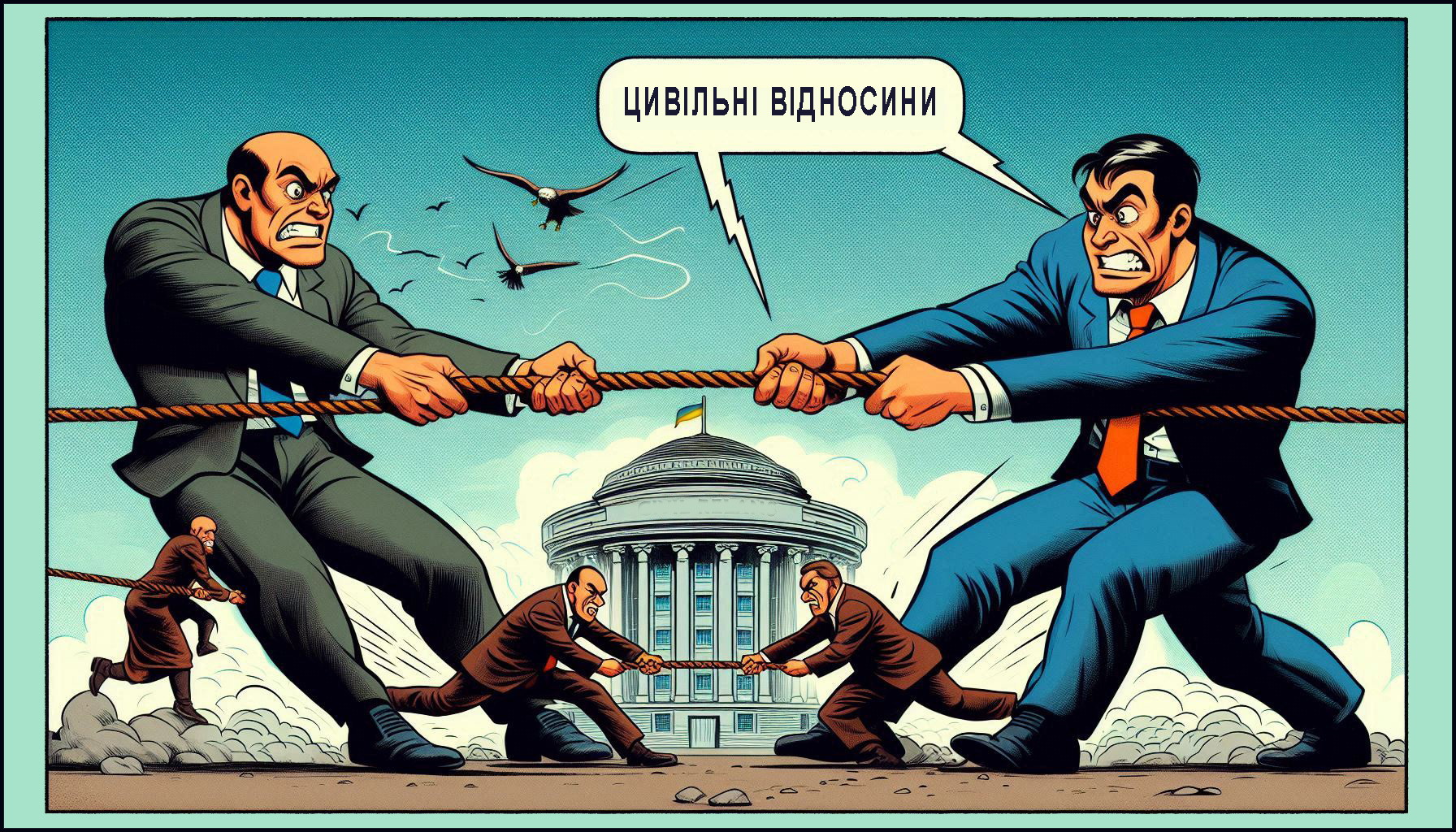
After completing the stage of exchanging positions in the case, a civil lawyer determines what motions he needs to submit at the preliminary court hearing to prove his position in the case, which could not have been done earlier. Of course, participation in court hearings defending the client’s position by providing oral explanations, preparing questions for the opposing party, explaining the essence of the evidence provided, and speaking in court debates based on the outcome of the court proceedings. Depending on the court’s decision, the likelihood of it being challenged by the dissatisfied party is high, and most likely the work of a civil lawyer will continue at the stage of appellate or cassation review with the filing of an appellate (cassation) appeal, response to them, participation in the appellate court hearing, and so on.
The court decision becomes legally binding and enforceable after thirty days from the date of its adoption if no appeal has been filed, or on the day the appellate court announces the decision if an appeal has been filed. However, the existence of a court decision that has become legally binding is not always the final resolution of the dispute, and the need for legal assistance in civil cases at the enforcement stage is significant. Therefore, at this stage, the lawyer prepares a statement to initiate enforcement proceedings, monitors its execution, and if necessary, submits motions to the enforcement officer or files necessary complaints to expedite the enforcement of the court decision.
It is obvious that a civil lawyer can be involved at all stages of a civil case, starting from the moment the issue is identified and the method of protecting the client’s rights is determined, and ending with the full implementation of the court decision. However, legal services of a lawyer, an attorney in civil disputes are not obligatory, it is just a service that can be used or not used to defend one’s rights independently.